
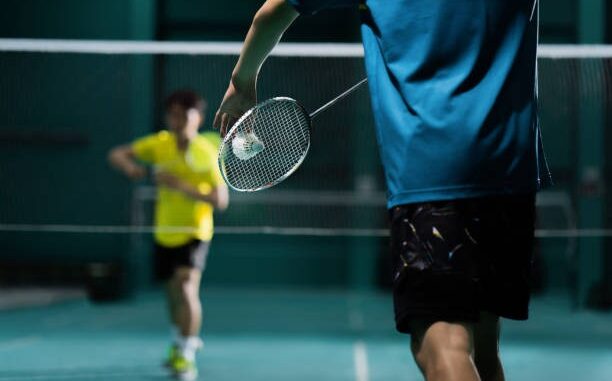
Understand the object of the game. Badminton, just like tennis, was the racket sport that was played by either 2 players or two teams of 2 players each. The object was for you or the team to get on to 21 points first. You scored the point whenever you successfully serving a shuttlecock and the opposing team commits the fault, which signify that the team fails to appropriately returning a shuttlecock.
Table of Contents
Learn the basic ways to strike the shuttlecock.
The standard badminton racket is 26 inches (66.0 cm) longer and weights anywhere to 4.5-5.5 ounces. Most of them were made with nylon and metal, and you would required to generating enough energy to effective way striking the shuttlecock with this lightened racket. The main strokes were the forehand and the backhand (as in tennis) and you would required the light, quick wrist to effectively striking a shuttle.
Master the grip.
The grip was how you holding the racket and it would affect every stroke that you hit in. You had 2 basic grips in a game, one for the forehand and one for the backhand.
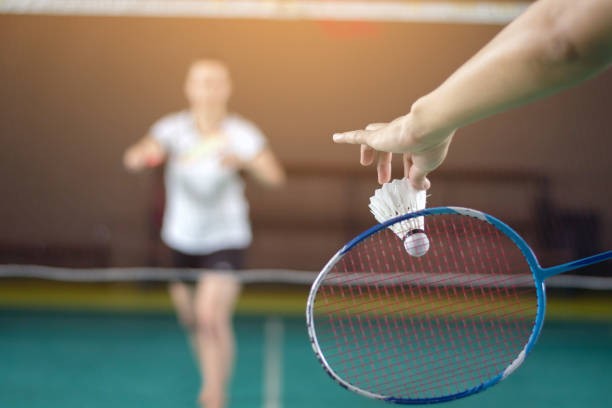
Master the forehand.
Once you see that the shuttle was coming lower and in front of you, you would required to hit that forehand to beat the opponent. Here’s what you supposed to do:
- Dropping the racket head down and behind you. Make certain that the racket extended out behind you.
- Kept the knees bent and ready to move.
- Move forward with the racket foot.
- Kept the arm nearly straight as you swing the racket, snap the wrist at the last possible second before you hit on the shuttle.
- Having the open racket face and swing a racket upward to generate momentum. Following through until the racket hits closeby the opposing shoulder.
Basic Shots and Techniques
• Grips: Master forehand and backhand grips to the control and power.
• Footwork: Small, efficient steps to position yourself; essential to covering the court.
• Stances: The ready stance (split step) prepare you for movement.
• Shots:
o Clear: Higher, deepened shot to push on opponent back.
o Drop Shot: Delicate shot landing just over the net.
o Smash: Powerful, downward attacking shot.
o Net Shot: Short shot closeby the net.
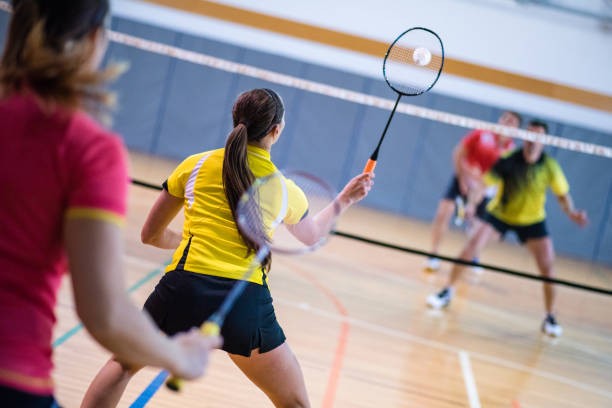
Gameplay Basics
Change Ends: After the first game, and if the third game is needed, at the end of a second.
Badminton was the dynamic and engaged racquet sport suitable for players of all skill levels and ages. Below were the fundamental aspects of a game presented in the pointwise manner.
I. The Objective
III. Basic Rules of Play
• Serving:
o Serves must be directed diagonally into the opponent’s service court.
o The entire shuttlecock must be contacted below the server’s waist at the moment of impact.
o Both server and receiver must remain within their respective service courts with both feet stationary until the serve is completed.
• Rally: Play continues after a successful serve with players hitting the shuttlecock back and forth over the net until one side fails to make a legal return.
• Faults: Common faults result in a point for the opponent:
o The shuttlecock lands outside the court boundaries.
o The shuttlecock gets caught in the net or hits the ceiling.
o A player or their equipment touches the net during play.
o The shuttlecock is hit twice in a row by the same side.
• Lets: A “let” stops play, and the rally is replayed. This might happen due to an unforeseen interruption or a specific rule infraction that warrants a redo.
IV. Fundamental Skills and Techniques
• Grips:
o Forehand Grip: Holding the racquet like shaking hands, used for shots on the dominant side of the body.
• Footwork: Efficient movement was crucial. The aim was to fast way move to hit the shuttlecock and instantly returning to “base position” (normally the center of a court) to cover a next shot.
• Stance: Proper body positioning (attacking, defensive, and net stances) maximizing power and readiness.
V. Essential Shots and Strategy
• Clear (or Lob): A higher, deep shot that travels to the back of opponent’s court. Utilized defensively to gain time to offensively or reposition to force a opponent to an backcourt.
• Smash: The most powerful shot in the badminton. A tough, downward-angled shot aimed at an opponent’s court, typically a point-winning attack.
• Drive: A flat, fast shot that travels parallel to a ground over the net. Often utilized in doubles to maintaining force fast response and pressure.
• Net Shot: Delicate shots played from close to a net tape, designed to land as closeby to the net as possible on opponent’s side, makes the returning tough way.





Leave a Reply