
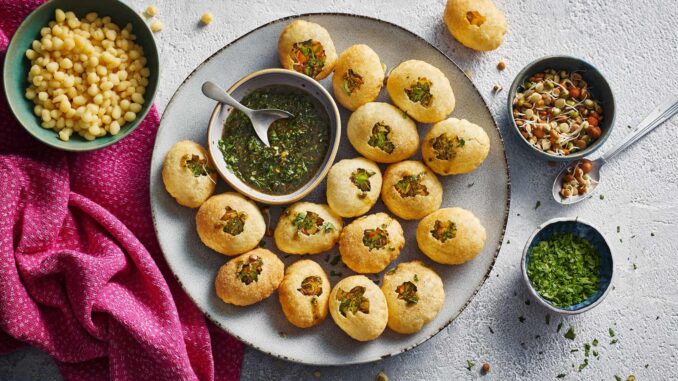
Mumbai journalist Upadhya explained, I thought my craving came from the place of wanting something that made us felt happier and ‘normal’. When every thing around was in such cluster, it’s reassuring when you taste something that the mouth and mind instinctively know. When you put that pani puri in the mouth, you understand you would get the ideal mix of cold, crunchy, spicy, tart, sweet. And, for those few moments, everything felt alright.
And even though pani puri is a perennial favourite across the nation, it is by no means standardised or even same everywhere. In fact, the name itself differed by place: pani puri is the Mumbai term, whereas in Delhi it is signify as golgappa. In Kolkata, it goes by the name of puchka, and in Uttar Pradesh, it’s pani ke batashe. The difference comes from the puri based ingredient – refined flour, semolina, and whole wheat– along with the fillings. And like with cricket leagues and politics, Indians loves to argue about which type is the best, and in each city, which pani puri wala making it the most chatpata.
Like the most sublime chaats, golgappa was best enjoyed on the streets. And while upscale restaurants had started serving it in the last some years – with modern twists like replacing the chutneys with spiced vodka shots and, shudder, guacamole fillings – these offerings rarely hit the spot. This is partly as street vendors knew the palate of the customers and tailor each golgappa order accordingly – Only the sweet-and-sour tamarind chutney”, and every claims to have their own secret mixes of flavourings and fillings.
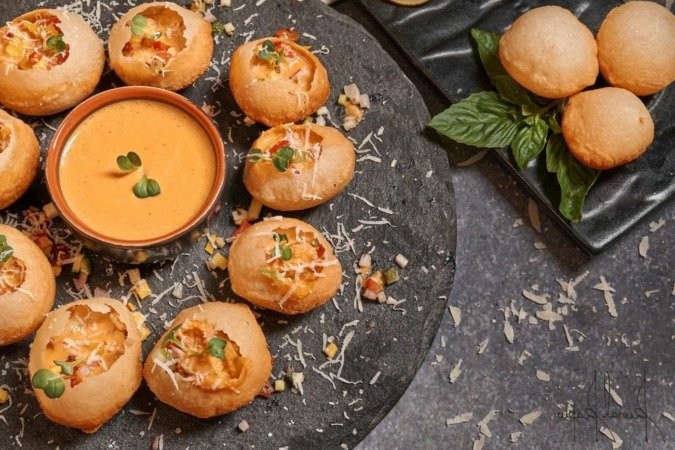
Food writer Krishna, who hails from UP, loves gol gappa but had not attempted to make it at home as, as she says, “I knew I cannot replicated my favourite flavours at sweet home.
Another reason could be that pani puri is best (or probably only) eaten by hand; there was no room for forks or finesse here. Kalyan author of The Travelling Belly, a book on Indian street foods, describes eating gol gappa as the foodie adventure sport, adding that restaurants could not recreating the thrill of standing on the pavement, unperturbed by persons jostling past. the eyes were focused on the gol gappa wala. You supposed to be ready to pop it in [your mouth] when your turn comes up.
It was [an] explosion in the mouth, yet it was soul food, Sengupta told wistfully, perhaps summing up what millions of us Indians think of pani puri.
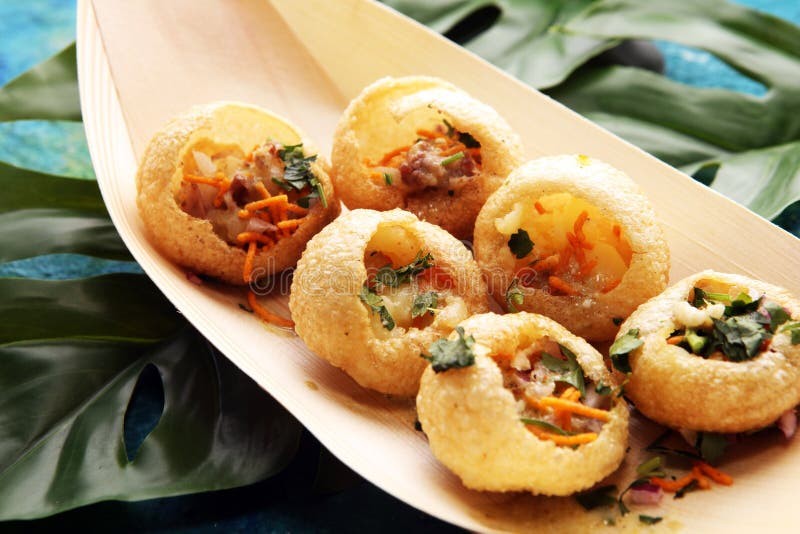
Panipuri[a] was a deep-fried breaded hollow spherical shell, about 1 inch (25 mm) in diameter, filling with the combination of potatoes, spices, raw onions, and chickpeas. It was the common snack and street food in a Indian subcontinent. It was often flavoured with herbs, chilli powder, chaat masala, and other spices.
Golgappa had evolved importantly over time. Also signify as golgappa, the dish consists of the tiny, hollow, or semolina shell filled and fried wheat with the spiced mashed potatoes and serving with either a brown-coloured dipping water; or both. This “water” was technically a diluted chutney. Over time, variations of the filling and the flavoured water emerging, reflectened the regional preferences and availability of ingredients. The flavoured water, also signify as the pani, was the essential component of the dish and was often the major source of flavour.
As per to culinary anthropologist Kurush and Krivi, chaat originated in the Northen Indian region of what was now Uttar Pradesh.The origins of pani puri tracing back to India. He also noted that it possible manner originated from Raj-Kachori: an accident way-made smaller puri given birth to gol gappa. It has been spread to the rest of India mainly due to the migration of persons from one part of the nation to another in a 20th century.





Leave a Reply